Does it matter that the DC pipe bombs were inoperable?

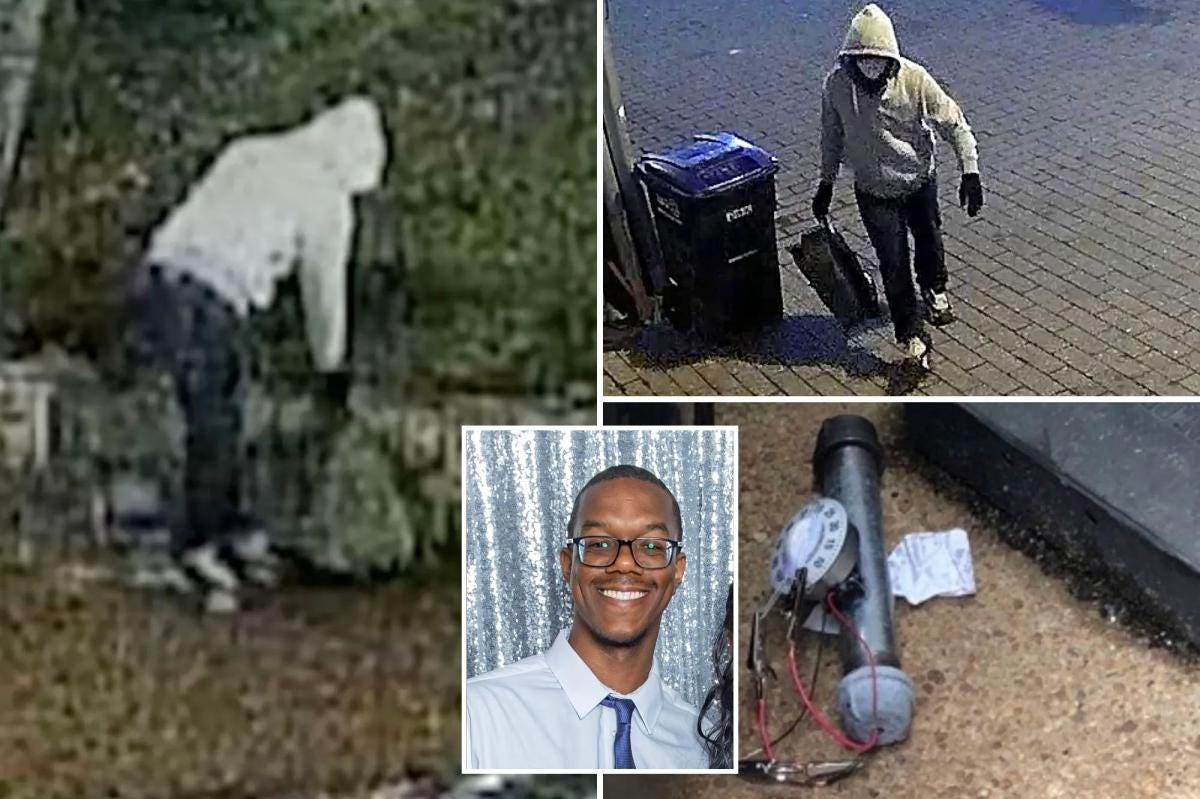
This past week, the attorneys for (alleged) DC pipe bomber Brian Cole submitted an expert report in support of their request for pretrial release.
The expert report was prepared by Brennan Phillips, who has “over 30 years of combined experience in Military Explosive Ordinance Disposal (EOD) and Public Safety Bomb Disposal, including 20 years as a Senior Explosives Enforcement Officer with the Bureau of Alcohol, Tobacco, Firearms, and Explosives (ATF).” He has extensive experience in the forensic review and investigation of post-blast explosions and of explosive devices. No doubt he is qualified.
In that report, Phillips makes a number of material conclusions (or discussed previous findings from the FBI investigation), including:
“The two suspected pipe bombs in question do not contain an explosive filler capable of causing an explosion.”
The powders recovered from the pipes are not consistent with black powder (an explosive) but are “consistent with inadequate mixing in a bowl.”
FBI testing from January 12, 2021 “indicated negative flame test results of powder samples taken from the two disrupted pipes.”
FBI testing from January 16, 2021 from some powder associated with the steel wool (of the RNC device) produced a flame test “with positive results.” Phillips concluded it “seems unlikely that this small amount of flame-reactive powder would be capable of causing the bulk of the insufficiently mixed powder to react or burst the steel pipe by itself.”
“Neither device has a functional fuzing and firing system capable of igniting a flame-sensitive explosive filler.”
“A single 9-volt battery attached to a 1.5-inch square of steel wool will not generate enough heat to ignite Black Powder.”
“In the absence of information from the Government detailing a workable theory for how these devices could have been made to cause an explosion, it is my opinion that neither device is a bomb capable of causing an explosion.”
But do those conclusions matter – and why were they submitted at this early stage? And what relevance do they have to the charges Cole faces?
Some reporting and discussion of the expert report make these conclusions out to be significant to Cole’s continued detention and to the charges he faces. But we’re not convinced. (The significance is more to those public officials and authorities who have overstated the potential of the devices to detonate…)
For starters, the expert report wasn’t an attack on the charges themselves (more on that below), but rather part of Cole’s effort to convince a federal judge to vacate a magistrate’s order to detain Cole pending trial. In Cole’s motion, his attorneys argued the magistrate made a “basic misconception” about Cole’s ability to make “explosive devices in short order, over a matter of hours, not necessarily days or weeks.” They further argued that there is “no credible evidence” that Cole could, or ever has, “made and deployed a viable explosive device.”
In arguing for pretrial release, Cole’s attorneys reasoned that he wasn’t dangerous and that conditions of home confinement would prevent further bombmaking activities:
“The government accuses Cole of mixing gunpowder and assembling dangerous, explosive devices shortly before, or on, January 5, 2021. But if Cole was in fact incapable of making a viable device on or before January 5, 2021, when free from any restraint on his ability to do so, it is highly unlikely that he could do so in the future if released under strict conditions of home detention and monitoring.”
It is highly unlikely that those arguments will be persuasive. Under the Bail Reform Act, there is a rebuttable presumption of detention, which presents Cole’s team with a near-insurmountable burden. As the magistrate observed in ordering Cole’s detention, Cole admitted to planting the devices “hoping they would detonate and that there would be news about it.”
So that goes to the timing and purpose of the expert report. But does the fact that the bombs were inoperable have any effect on the charges?
The answer is no. Cole’s superseding indictment alleges two statutory violations: the interstate transportation of explosives (18 USC § 844(d)) and malicious attempt to use explosives (18 USC § 844(i)).
Even if the pipe bombs were inoperable and incapable of “exploding” (the combination of a failed attempt at making black powder, the inadequacy of the ignition, etc.), they still meet the statutory definition of “explosive” under the statute.
And the fact that the bombs (or devices, or whatever you’d like to call them) failed to detonate is immaterial to the attempt charge. That statute – 18 USC § 844(i) states:
“Whoever maliciously damages or destroys, or attempts to damage or destroy, by means of fire or an explosive, any building, vehicle, or other real or personal property used in interstate or foreign commerce or in any activity affecting interstate or foreign commerce shall be imprisoned for not less than 5 years and not more than 20 years…” (Emphasis added.)
Obviously, because the charge is the attempt, the bombs need not be operable. In fact, under the statute, they don’t even need to be constructed.
Let’s use a real-world example to illustrate. A man thinks up a plan to bomb an oil pipeline so he could profit from petroleum futures. He contacts a friend he met in prison who has an expertise in explosives and provides that friend with money to purchase explosive ingredients. He also gives him unassembled explosive devices and explosives, along with details on where to place the bombs (once assembled). That is more than sufficient to secure a conviction under 844(i). (To finish that story, the friend notified the authorities and the man pled guilty.)
In Cole’s case, there is more than enough evidence to convict for the attempted bombing. (The same for the transportation of explosives charge.) According to his confession and his financial records, he purchased many of the raw materials and assembled the devices. He explained how he constructed the devices. He admittedly placed the devices at the RNC and DNC because he wanted to do something “to the parties” because “they were in charge.”
To summarize, the charges stand - and Cole will remain detained - even if Cole was a bad bombmaker.
We further note that any evidence that Cole was entrapped would have been included in the requests for pretrial release. Not saying new evidence won’t come to light (entrapment or FBI misconduct, for example), but we haven’t seen it yet.
I believe spinning the narrative about the J6 insurrection took up most of the oxygen in the room. Once the democrats took control, the pipe bomber threat, if he was acting alone, turns out to be a random coincidence, but then why did it take the DoJ & FBI so long to figure out and identify this criminal mastermind? Was it just coincidence the VP elect wasn’t at the capitol and just happened to be at DNC HQ? Did someone get to the bomb sniffing dogs and their handlers as these devices were in plain sight. Can someone explain why the camera angles were changed that very day?
It wasn’t like there wasn’t pressure from investigative journalists or podcasters like Dan Bongino to find this hooded person. This suspect somehow remained illusive throughout the Biden administration, and then he becomes just the obvious choice and conveniently has left a trail of purchases dating back a year while he’s gathered material for his crime. Then he confesses and the packaging is complete. He’s guilty of something, I don’t know what, he’s not that smart, but some of the best sleuths we have are in the FBI, or at least I thought they were. Somehow, I don’t think we’ll ever know the truth about this, some kid will spend a lot of time in jail, maybe he’ll get the therapy sessions he needs to learn from this, if he doesn’t get abused by the population? It just seems that I’m being gaslighted and there’s more to this than will ever come to light. Is this the new transparency?
If he planted those devices in the manner described, he definitely wanted to convince anyone that might discover them that they were explosive devices.
He says he was the one who assembled and planted the devices, with the intent that they would explode.
Those two details should be enough to allow for detention until trial.